


How do Trichoderma and Bacillus work synergistically?
Beneficial microbes such as Bacillus velezensis and Trichoderma are widely adopted biocontrol agents to fight soil‑borne crop diseases. Many formulators simply mix different high‑performance strains together, assuming their effects will add up. Yet laboratory agar plates often show obvious mutual antagonism between Bacillus velezensis and Trichoderma. This raises a practical question: can these two microbes really work side‑by‑side in real farm soil?
Research published in The ISME Journal, led by Academician Shen Qirong’s team at Nanjing Agricultural University together with Leiden University, uncovered the metabolite‑mediated partnership behind this ecological puzzle. Global soil metagenomic data revealed that Bacillus and Trichoderma are positively correlated across diverse natural soil habitats, proving they can co‑exist under field conditions.
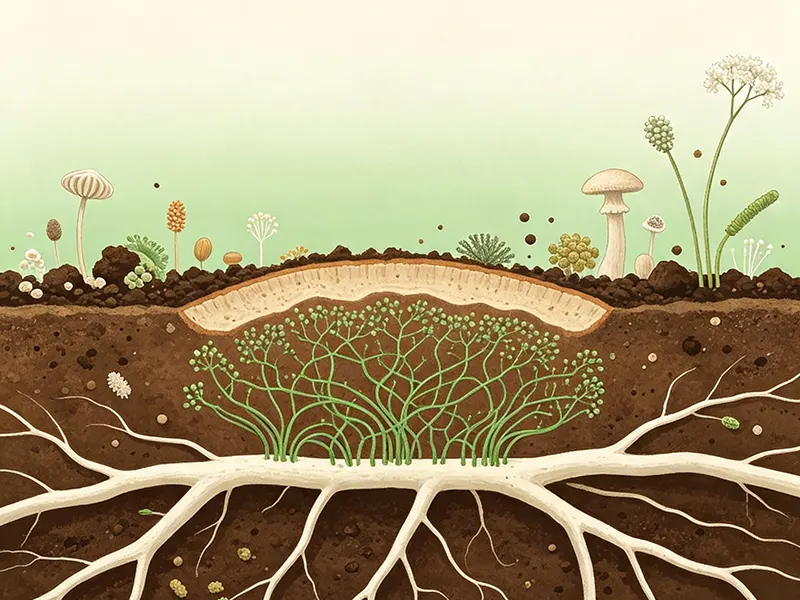
When the plant‑pathogen Fusarium oxysporum is present, the interaction pattern shifts completely. Triggered by fungal threats, Bacillus velezensis activates its σ‑B stress‑response system and secretes surfactin. Beyond its antibacterial function, surfactin acts as an inter‑kingdom signal molecule. It stimulates Trichoderma to produce T22‑azaphilone, a protective metabolite that improves fungal stress tolerance.
Meanwhile, Fusarium oxysporum releases fusaric acid, a phytotoxin that strongly suppresses Bacillus velezensis growth. Trichoderma can tolerate and efficiently degrade fusaric acid. Temporarily relieved of bacterial competition, the trichoderma establishes its population first. Once fusaric acid is largely broken down, growth inhibition against bacillus is removed. The two beneficial microbes then jointly suppress fusarium wilt and promote plant growth. Pot trials demonstrated that combined inoculation achieved far better disease control than single‑strain application.
YUNCHO distributes bio‑inoculant products originating from the research achievements of Academician Shen Qirong’s team at Nanjing Agricultural University. Our formula applies this proven microbial‑synergy mechanism. The featured strain Trichoderma NJAU4742 delivers superior biocontrol performance compared with ordinary trichoderma strains. It exhibits stronger toxin‑degrading capacity, robust rhizosphere colonizing ability and longer persistence in soil. Powered by NJAU4742’s outstanding physiological properties, the synergistic biocontrol effect when paired with Bacillus velezensis gets significantly amplified.
This research delivers critical lessons for compound microbial‑product development. Strong in‑vitro inhibition on agar plates does not automatically disqualify strain combinations for field application. Successful compound inoculants are not just physical mixtures of individual potent strains. Real‑world performance depends on metabolite communication, toxin‑detoxification capacity, population‑building rhythm and adaptability within actual rhizosphere environments.
Disclaimer: This summary is rewritten based on public academic findings for science communication purposes. It is not verbatim excerpt from the original journal article. Actual field results may vary with soil type, crop varieties and agricultural management practices.