


What Makes Trichoderma harzianum NJAU4742 Unique?
Core Strain Differentiation
There is a wide range of microbial inoculant products labeled "Trichoderma harzianum" on the market, yet the functional properties of the specific strains used vary significantly across products. The Trichoderma harzianum NJAU4742 strain, independently developed by the team of Academician Shen Qirong from Nanjing Agricultural University, offers the following exclusive technical advantages:
1. Superior Root Surface Colonization Capacity
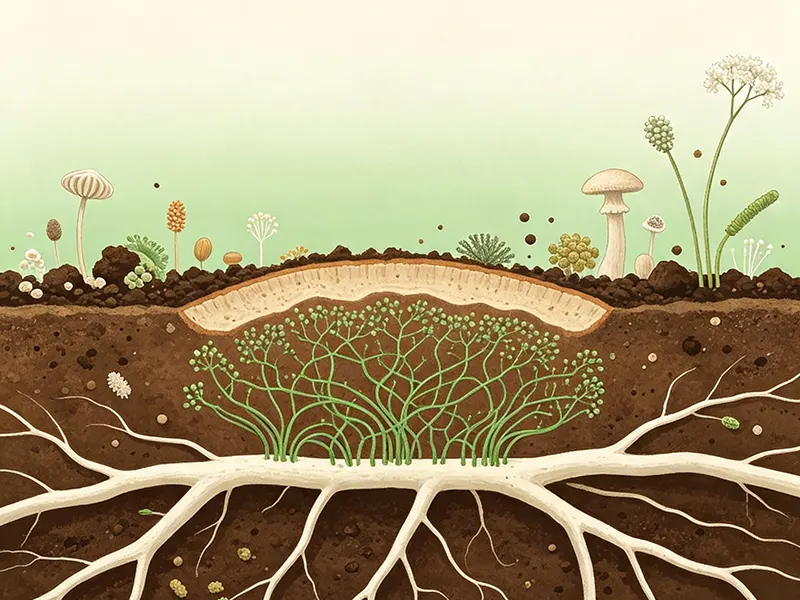
After years of targeted screening and domestication, strain NJAU4742 demonstrates exceptional affinity and adhesion to crop root surfaces. Once applied to soil, it rapidly locates and colonizes the root epidermis, forming a stable and dense beneficial biofilm. It is not easily displaced by indigenous soil microbial communities, enabling longer-lasting, continuous protection for crop root systems.
2. Remarkable Root Growth-Promoting Performance
Beyond its proven biocontrol efficacy against soil-borne pathogens, this strain stands out for its outstanding root growth promotion capability. After establishing on roots, it secretes multiple plant growth regulators that significantly stimulate the proliferation of lateral roots and root hairs, effectively expanding the total absorption area of the root system. Field trials indicate that crops treated with this strain have more than twice the root-soil adhesion mass of untreated crops, with greatly enhanced root activity and nutrient uptake efficiency.
3. Diverse Secondary Metabolite System
Strain NJAU4742 synthesizes a broad spectrum of highly bioactive secondary metabolites, exerting biocontrol effects through multiple complementary mechanisms. In addition to conventional competition, mycoparasitism and antagonism, it possesses a unique fusaric acid detoxification mechanism: via salicylic acid hydroxylase, it converts pathogen-secreted phytotoxins into low-toxicity metabolites, neutralizing pathogen damage at the toxin level. This is a key factor behind its stronger control performance compared to common Trichoderma strains.
4. Proprietary IP & Proven Industrial Track Record
NJAU4742 is a functional strain with full independent intellectual property rights, validated by over a decade of R&D and large-scale industrial application. It is supported by mature solid-state fermentation processes and advanced strain viability preservation technologies. To date, the technology has been adopted by area of over 153,333 hectares(2.3 million mu). It delivers over 75% control efficacy against soil-borne diseases and drives an average crop yield increase of 15% and above, with its technical maturity and field stability verified through extensive commercial use.
Compound Microbial Inoculant Product Profile
Product Overview
This compound microbial inoculant is formulated with two core functional strains: Trichoderma harzianum NJAU4742 and Bacillus velezensis. Backed by the scientific achievements of Academician Shen Qirong’s team at Nanjing Agricultural University, it adopts a cross-kingdom "fungi + bacteria" formulation strategy. Through the synergistic action of the dual strains, it delivers three integrated benefits: root protection & disease control, root growth & seedling vigor enhancement, and rhizosphere microecology improvement. It is suitable for root health management and soil biological improvement across all major crop types.
Core Functional Strains
- Trichoderma harzianum NJAU4742 Isolated and screened from natural environments by Academician Shen Qirong’s team, this is a high-performance Trichoderma strain with both biocontrol and growth-promoting functions. Featuring high biomass, strong root colonization ability and abundant secondary metabolites, it inhibits a wide range of soil-borne pathogenic fungi via mycoparasitism and niche competition, while secreting bioactive substances to vigorously boost root development. It is recognized as a benchmark strain in the Trichoderma biofertilizer industry.
- Bacillus velezensis A selected high-activity Bacillus velezensis strain with superior environmental stress tolerance and a broader antimicrobial spectrum compared to conventional Bacillus subtilis. It produces multiple antimicrobial substances including lipopeptide antibiotics, polyketides and high-affinity siderophores, delivering effective inhibition against both fungal diseases and a range of bacterial diseases. It also exhibits strong rhizosphere colonization ability and soil conditioning performance.
Dual-Strain Synergistic Mechanism
The combination of Trichoderma harzianum NJAU4742 and Bacillus velezensis is not a simple mixture, but a highly complementary functional system that creates a three-dimensional "root surface protection + rhizosphere conditioning" defense network:
Layer 1: Precise root surface protection — Trichoderma forms the primary root defense barrier Trichoderma harzianum NJAU4742 preferentially colonizes the root surface, building a dense protective layer of beneficial microbes. It directly attacks pathogenic fungi invading roots via mycoparasitism, while secreting enzymes and antimicrobial compounds to suppress pathogen spore germination and mycelial spread. Meanwhile, its unique toxin detoxification mechanism degrades harmful substances such as fusaric acid released by pathogens, eliminating toxin-induced root growth inhibition and preserving normal root physiological function.
Layer 2: Rhizosphere ecological conditioning — Bacillus optimizes the root-zone soil environment Bacillus velezensis multiplies rapidly in the rhizosphere soil, suppressing pathogen proliferation by occupying ecological niches and competing for nutrient resources. Its secreted lipopeptides (including surfactin and fengycin) disrupt pathogen cell membranes for broad-spectrum antimicrobial action; its high-affinity siderophores efficiently chelate environmental iron ions, inducing "iron starvation" in pathogens to further suppress pathogen populations. Additionally, Bacillus velezensis induces systemic resistance in crops, elevating the plant’s overall disease defense capacity.
Layer 3: Metabolic complementation & synergistic amplification — Dual-strain interaction boosts overall performance The two strains form a mutually beneficial metabolic interaction in the rhizosphere: Trichoderma metabolites provide nutrient substrates that support Bacillus colonization and proliferation in the root zone; in turn, certain secondary metabolites from Bacillus work synergistically with Trichoderma’s antimicrobial compounds to enhance overall antimicrobial potency. Research confirms that the combined application of the two strains achieves better soil-borne disease control than either strain applied alone, delivering a true "1+1>2" synergistic effect.
Core Product Benefits
- Broad-spectrum soil-borne disease control — Effective against fusarium wilt, root rot, damping-off, stem base rot and other major soil-borne fungal diseases, with supplementary inhibition of certain bacterial diseases, helping reduce chemical pesticide reliance.
- Powerful root growth & seedling strengthening — Dramatically stimulates lateral root and root hair development, increases total root length and absorption area, improves water and fertilizer use efficiency, and ensures fast seedling establishment and vigorous early growth.
- Rhizosphere microecology improvement — Modulates soil microbial community structure, increases beneficial microbial abundance in the root zone, and gradually restores degraded soil microecology to reduce soil-borne disease pressure at the source.
- Enhanced crop stress tolerance — Induces elevated systemic resistance, improving crop resilience to abiotic stresses such as drought, low temperature and saline-alkali conditions, and minimizing yield losses under adverse environments.
Scope of Application
Suitable for a full range of crops including vegetables, melons, fruit trees, Chinese medicinal herbs and field crops. Compatible with multiple application methods: seedling substrate amendment, root dipping at transplanting, root drenching during growth stages, and application via flood irrigation or drip irrigation systems.
Glossary
Colonization: The complete process by which microorganisms (bacteria, fungi, actinomycetes, endophytes, etc.) arrive at a host or environmental surface, achieve adhesion, survive and reproduce continuously, and establish a stable population.Yale.Yan, Yuncho Trade, Jiangsu, ChinaAugust 11, 2026